Understanding Decentralized Artificial Intelligence Networks

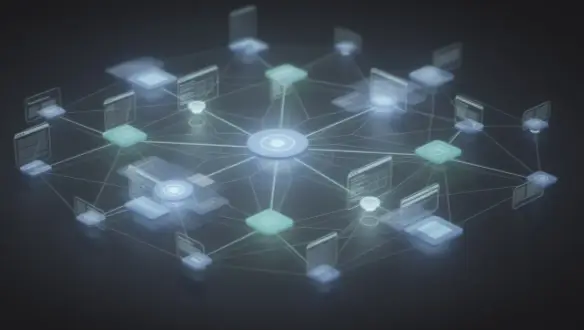
Decentralized AI networks distribute intelligence across autonomous agents, reducing reliance on a single control point. They enable resilient, cross-platform collaboration with auditable update flows and edge-native processing. Governance balances autonomy with interoperability, preserving privacy while accelerating innovation. These systems promise faster insights and robust data governance across sectors like healthcare, finance, and manufacturing. Yet critical questions remain: who designs the standards, how are security and accountability enforced, and what path guides practical deployment?
What Decentralized AI Is and Why It Matters Today
Decentralized AI refers to systems where intelligence emerges from a network of autonomous agents that operate without a single central authority.
The approach enables resilient collaboration, reducing gatekeeping while accelerating innovation.
By distributing decision-making, it enables privacy preserving workflows and resilient governance.
Model interoperability ensures cross-platform compatibility, enabling seamless integration, secure updates, and coherent objectives across diverse agents toward a common, freedom-affirming trajectory.
Centralized vs. Decentralized AI: Key Differences
Centralized and decentralized AI represent two ends of a spectrum in how intelligence is organized, governed, and deployed across networks.
Key differences lie in control, risk, and scalability.
Centralized systems emphasize efficiency and rapid iteration; decentralized approaches emphasize resilience and autonomy.
Privacy preserving mechanisms and model interoperability become crucial for secure collaboration, cross-platform exchanges, and collective intelligence without surrendering freedom.
See also: How Smartwatches Have Become Everyday Technology Accessories
Real-World Decentralized AI Use Cases and Benefits
How do real-world decentralized AI systems translate theory into tangible value across industries? Chinese-wall detachment aside, networks enable autonomous collaboration, optimized decision cycles, and resilient data ecosystems.
Use cases span healthcare, finance, and manufacturing, delivering faster insights while reducing risk.
Outcomes emphasize privacy preserving, edge native processing, federated learning, and auditable governance—freeing innovators to deploy secure, scalable intelligence everywhere.
Challenges, Risks, and Governance for Decentralized AI
What are the main friction points when scaling decentralized AI, and how can governance structures anticipate and mitigate them? Decentralized AI faces privacy governance challenges, data sovereignty constraints, and synchronized incentives. Strategic governance enables transparent collaborative benchmarking, standardized model interoperability, and resilient trust frameworks. Technical architectures align incentives with risk controls, fostering interoperable ecosystems while preserving autonomy, security, and freedom for participants.
Conclusion
Decentralized AI networks envision intelligence distributed across autonomous agents, operating without a central sovereign. They enable resilient collaboration, auditable updates, and privacy-preserving interoperability. They fuse edge-native processing with governance that respects autonomy, balancing innovation with accountability. They turn data into shared insights without gatekeeping, transforming healthcare, finance, and manufacturing through scalable, secure decision-making. They empower diverse stakeholders to co-create, iterate, and evolve—networked intelligence driving rapid discovery, trusted governance, and a freedom-affirming trajectory for intelligent systems.